住 as a Result Complement — Hold / Secure / Stop
Overview
住 (zhù) is a result complement meaning something ends up held in place, stopped, or retained. When you attach 住 to a verb, you are saying the action produced a state of being fixed: a hand grips something, a moving thing halts, or a piece of information stays in the mind. 抓住 is "grab hold of," 停住 is "come to a stop," 记住 is "memorize" — literally holding information in your head. The unifying idea across all its uses is simple: something is now fixed in place.
住 (zhù) says something ends up fixed in place — gripped, halted, or held in memory: 抓住, 停住, 记住.
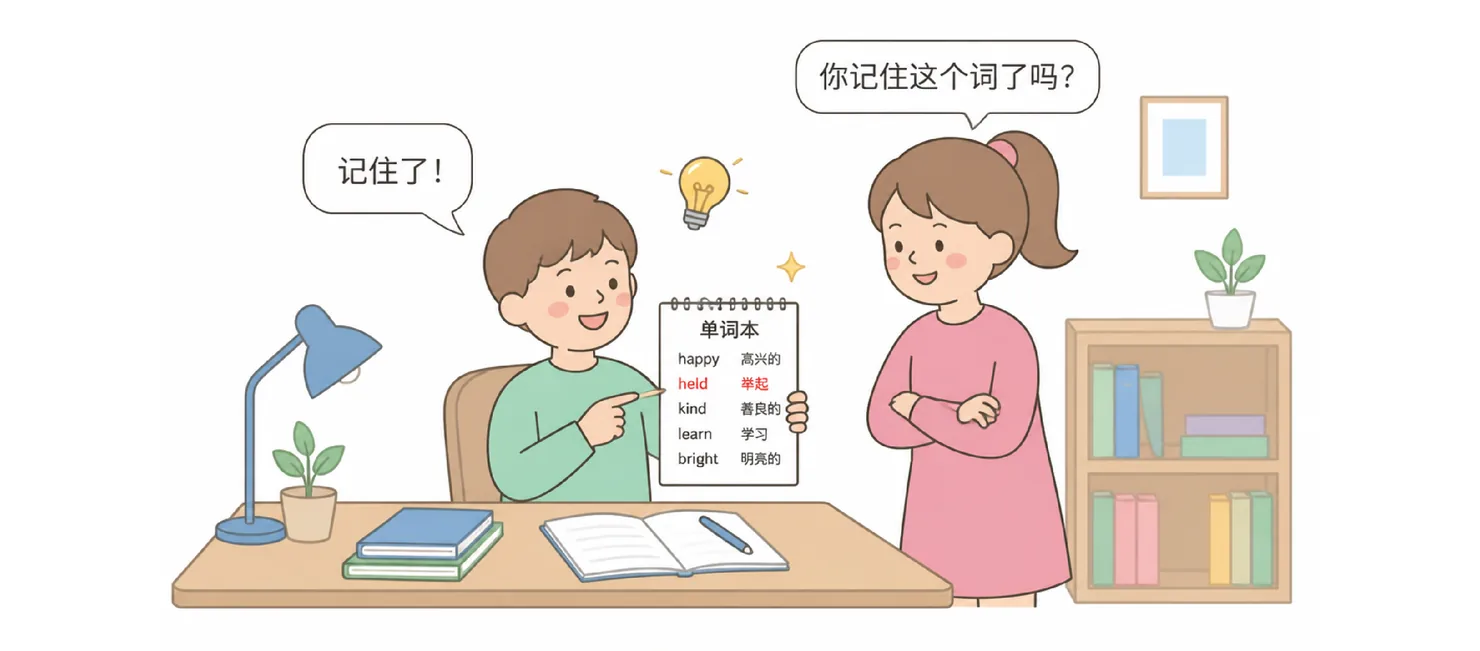 你记住这个词了吗?— 记住了!“Did you memorize this word?” — “Memorized it!”
Key rule: 住 attaches directly to the verb. Think of it as “and it stayed put” — whether in your hand, in its tracks, or in your memory.
What 住 Adds to the Verb
| Without 住 | Pinyin | With 住 | Pinyin | Difference |
|---|---|---|---|---|
| 我抓了扶手。 | Wǒ zhuā le fúshǒu. | 我抓住了扶手。 | Wǒ zhuā zhù le fúshǒu. | grabbed at vs. held on |
| 我记了号码。 | Wǒ jì le hàomǎ. | 我记住了号码。 | Wǒ jì zhù le hàomǎ. | noted it vs. memorized it |
The Three Shades of 住
| Shade | What it means | Example |
|---|---|---|
| Physical holding | grasping something securely | 抓住 zhuā zhù — catch hold of; 握住 wò zhù — grip |
| Stopping / halting | bringing movement to an end | 停住 tíng zhù — come to a stop; 站住 zhàn zhù — halt; 拦住 lán zhù — block |
| Mental retention | holding information in the mind | 记住 jì zhù — memorize |
Which Verbs Pair with 住
| Verb + 住 | Pinyin | English | Verb + 住 | Pinyin | English |
|---|---|---|---|---|---|
| 记住 | jì zhù | memorize / remember | 抓住 | zhuā zhù | catch hold of / grasp |
| 停住 | tíng zhù | come to a stop | 站住 | zhàn zhù | stand still / halt |
| 留住 | liú zhù | keep / detain | 拦住 | lán zhù | block / stop someone |
| 关住 | guān zhù | shut in / enclose | 握住 | wò zhù | hold firmly / grip |
Compatibility: 住 needs a verb involving contact, movement, or information. It does not attach to states or emotions — ❌ 喜欢住 (xǐhuān zhù), ❌ 知道住 (zhīdào zhù) — since these cannot be “held” or fixed.
Core Examples
| Chinese | Pinyin | English | Context |
|---|---|---|---|
| 你记住这个词了吗? | Nǐ jì zhù zhège cí le ma? | Did you memorize this word? | mental retention |
| 请抓住扶手。 | Qǐng zhuā zhù fúshǒu. | Please hold onto the handrail. | physical holding |
| 车停住了。 | Chē tíng zhù le. | The car came to a stop. | movement stopped |
| 他站住了,回头看我。 | Tā zhàn zhù le, huítóu kàn wǒ. | He stopped and turned to look at me. | halting motion |
| 我拦住了他。 | Wǒ lán zhù le tā. | I stopped him from going. | preventing movement |
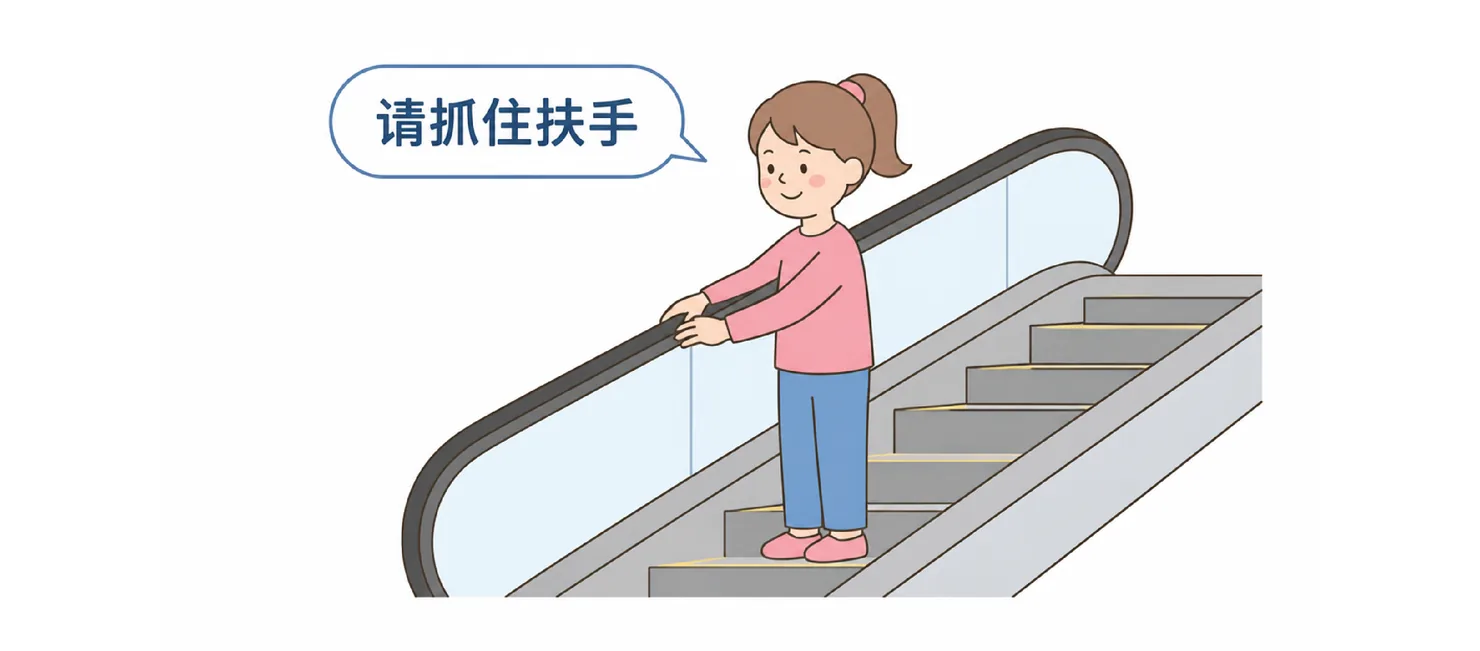 请抓住扶手 — “Please hold onto the handrail.” A very common safety instruction.
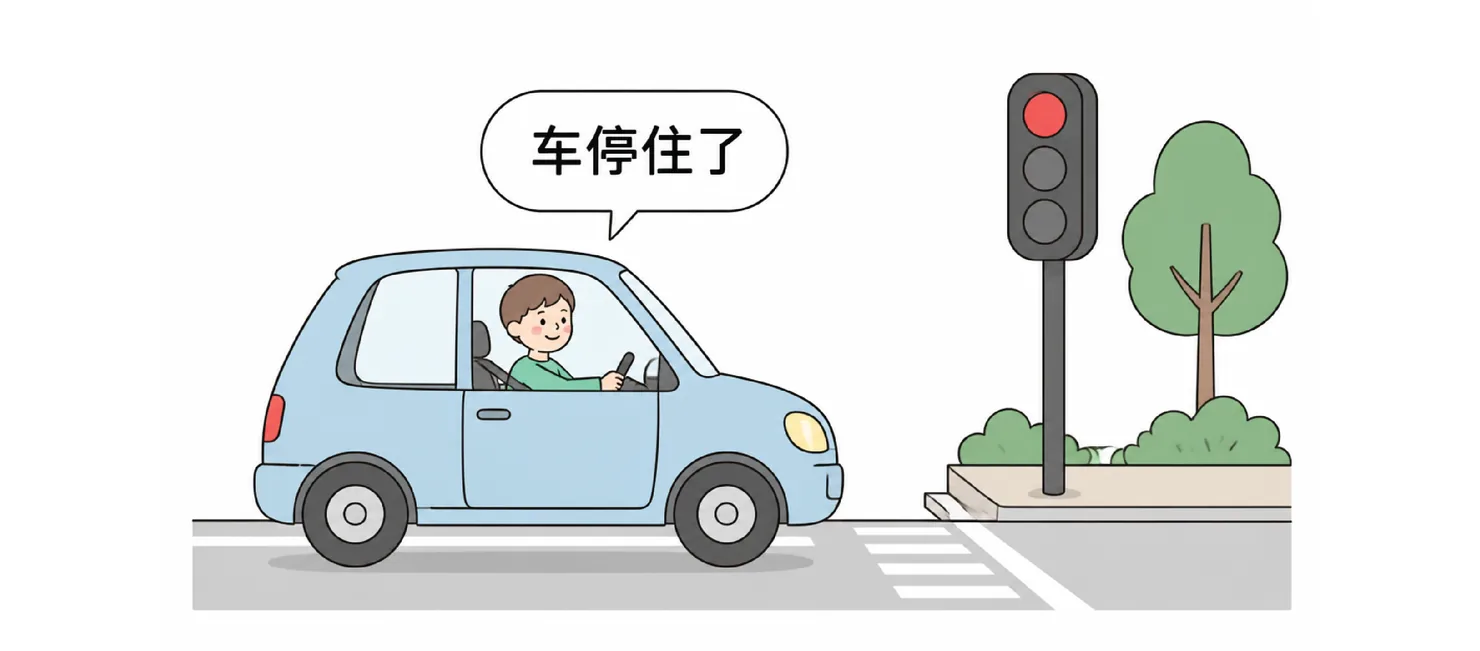 车停住了 — “The car came to a stop.”
Nuance 1 — 记住 Is an Everyday Essential
记住 is the single most useful V+住 pair for a learner. It means "memorize" or "remember" in the sense of holding information — the knowledge stuck. Notice the difference from plain 记, which is only the act of noting something down or making the effort.
记住 = the information stuck. Plain 记 is only the act of noting it.
| Chinese | Pinyin | English |
|---|---|---|
| 我记住你的名字了。 | Wǒ jì zhù nǐ de míngzi le. | I’ve memorized your name. |
| 请记住这个电话号码。 | Qǐng jì zhù zhège diànhuà hàomǎ. | Please remember this phone number. |
| 这么多单词,我记不住。 | Zhème duō dāncí, wǒ jì bu zhù. | So many words — I can’t memorize them all. |
Nuance 2 — 住 in Safety Instructions
Because 住 means "hold firmly" or "halt," it appears constantly in commands about safety and stopping. These are short, high-frequency phrases worth knowing by ear.
住 shows up in everyday commands to hold on or stop.
| Chinese | Pinyin | English |
|---|---|---|
| 抓住! | Zhuā zhù! | Hold on! / Grab it! |
| 站住! | Zhàn zhù! | Stop right there! |
| 请抓住机会。 | Qǐng zhuā zhù jīhuì. | Seize the opportunity. (figurative) |
Nuance 3 — Nothing Comes Between the Verb and 住
| Chinese | Pinyin | English | |
|---|---|---|---|
| ✅ Correct | 我记住了这个词。 | Wǒ jì zhù le zhège cí. | I memorized this word. |
| ❌ Incorrect | 我记了住这个词。 | Wǒ jì le zhù zhège cí. | 了 cannot separate 记 and 住. |
Negation — Use 没, Not 不
| Chinese | Pinyin | English | |
|---|---|---|---|
| ✅ Correct | 我没记住他的名字。 | Wǒ méi jì zhù tā de míngzi. | I didn’t memorize his name. |
| ❌ Incorrect | 我不记住他的名字。 | Wǒ bù jì zhù tā de míngzi. | 没 is for completed actions, not 不. |
The one place 不 appears: the potential form — 记不住 (jì bu zhù, can’t memorize), 抓不住 (zhuā bu zhù, can’t hold onto), 停不住 (tíng bu zhù, can’t stop). Positive: 记得住 (jì de zhù, can memorize).
Quick Reference
| Point | Summary |
|---|---|
| Meaning | 住 = held, stopped, or retained — fixed in place |
| Attachment | directly after the verb — nothing in between |
| Object position | after the V+住 pair |
| Negation | 没 for completed actions; 不 only in the potential form |
| Three uses | physical grip · halting movement · holding in memory |
| Common verbs | 记, 抓, 停, 站, 拦, 留, 握, 关 |
Drills
Fill in the correct result complement. Choose from 住 / 完 / 到 / 开. Each question’s English meaning is the hint.
- 你记___这个词了吗?(Did you memorize this word?)
- 请抓___扶手。(Please hold onto the handrail.)
- 车停___了。(The car came to a stop.)
- 他站___了,回头看我。(He stopped and turned around.)
- 我拦___了他。(I stopped him from going.)
- 你的名字我记___了。(I’ve memorized your name.)
- 这么多单词,我记不___。(I can’t memorize so many words.)
- 请把门打___。(Please open the door.)
- 我吃___饭了。(I finished eating.)
- 你找___钥匙了吗?(Did you find the keys?)
- 他把窗户推___了。(He pushed the window open.)
- 票都卖___了。(The tickets are all sold out.)
Answer Key: 1. 住 2. 住 3. 住 4. 住 5. 住 6. 住 7. 住 8. 开 9. 完 10. 到 11. 开 12. 完
Notes
- Common V+住 chunks: 记住, 抓住, 停住, 站住, 拦住, 握住.
- 抓住机会 (“seize the opportunity”) shows the figurative reach of 住 beyond physical holding.
- 记不住 (“can’t memorize it”) is one of the most useful potential-form phrases for learners.
- For the opposite idea of things coming apart, see 开; for the whole family see result complements.
Sources
HSK Standard Course 3 — 结果补语 (住) HSK Standard Course 2 — L9 (结果补语, result complements introduced) HSK Standard Course 3 — L6 (V得/不 + RC, potential form)